
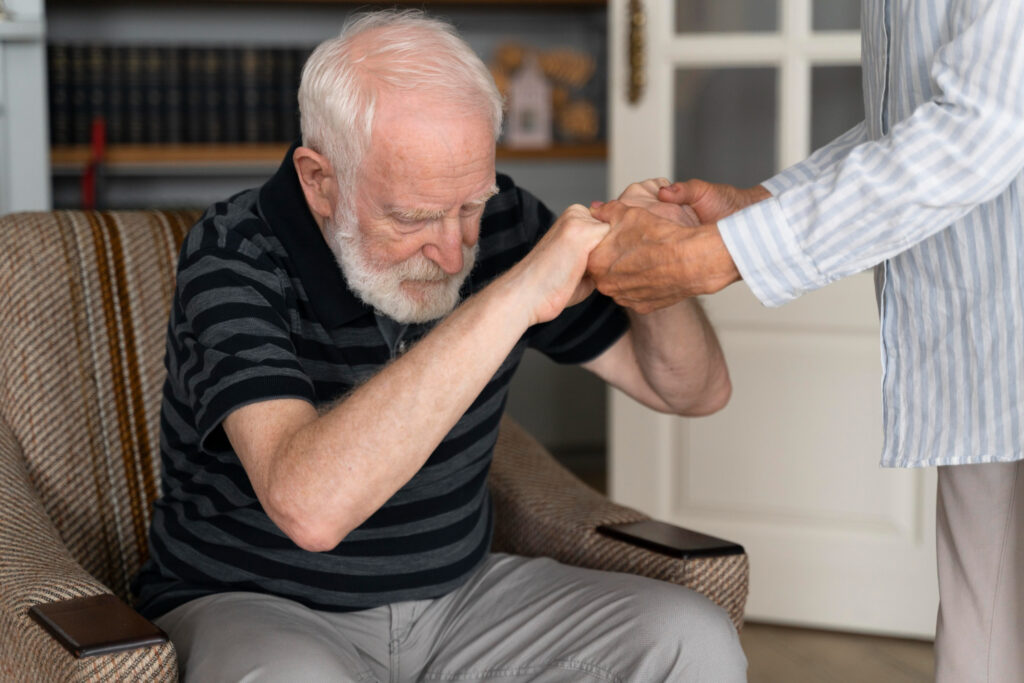
Parkinson’s disease is a progressive neurological condition that can affect movement, balance, coordination, posture, and the ability to perform everyday activities. Common movement difficulties may include slowness, stiffness, tremors, changes in walking pattern, and balance problems.
At Lora Physiotherapy and Rehabilitation Centre, we provide personalized physiotherapy and rehabilitation support for people living with Parkinson’s disease. Our approach focuses on maintaining mobility, improving physical function, supporting independence, and helping patients remain active and confident in daily life.
Parkinson’s disease can affect each person differently. Common physical challenges include:
Physiotherapy can play an important role in managing movement-related difficulties associated with Parkinson’s disease. A structured exercise and rehabilitation program can help support mobility, strength, balance, flexibility, and functional independence.
Treatment may include:
Changes in walking and balance can increase the risk of falls in people with Parkinson’s disease. Physiotherapy may focus on improving step length, walking control, turning, balance, and safe movement strategies.
Exercises and practical techniques can be incorporated into daily routines to help patients move more safely and confidently.
Regular, appropriately selected exercise can help maintain physical capacity and reduce the effects of inactivity. Physiotherapy may include exercises designed to support:
The exercise program is adjusted according to the patient’s abilities, symptoms, and stage of the condition.
There is no single rehabilitation program suitable for everyone with Parkinson’s disease. At Lora Physiotherapy and Rehabilitation Centre, treatment is tailored to the individual’s movement difficulties, physical abilities, lifestyle, and functional goals.
Dr. D. Karunya, Senior Consultant Physiotherapist with 10+ years of experience, provides personalized physiotherapy and rehabilitation guidance with a focus on maintaining movement and supporting independence.
Consistent exercise and safe movement practice can be an important part of long-term Parkinson’s management. Patients and caregivers may receive guidance regarding:
Physiotherapy can be considered when Parkinson’s disease begins to affect walking, balance, posture, flexibility, strength, or everyday activities. Regular rehabilitation can help address changing movement needs over time.
A medical professional should evaluate new, sudden, or rapidly worsening neurological symptoms, as these may require prompt medical assessment.
Parkinson’s disease is a long-term condition, but appropriate exercise and rehabilitation can help many individuals maintain physical function and independence for longer.
EXCELLENT Based on 73 reviews
 Posted on Google
 prabhavathireddy patilExcellent physiotherapist! Karunya maam and team is highly skilled, professional, and very friendly. The treatment sessions were effective, and the recovery exercises were easy to follow. Highly recommended for anyone looking for quality care.Posted on Google
 Sumalatha ReddyVery good physiotherapy and professional. I have got relief from frozen shoulder.Posted on Google
 G. NaniGood treatmentPosted on Google
 venkatesh Aleti1974Excellent treatmentPosted on Google
 Vamshi ThotakuriGood treatment for Back pain