Stroke rehabilitation is a process that helps people recover after a stroke. It focuses on regaining movement and independence. Physiotherapy is a key part of stroke rehabilitation. After a stroke, many people find it hard to move or do daily tasks. Because of this, stroke rehabilitation is important for improving quality of life. With the right support, many stroke survivors can regain skills and confidence. In many cities, stroke rehabilitation centers offer specialized care and physiotherapy for stroke recovery.
What Is Stroke Rehabilitation?
A stroke happens when blood flow to the brain is blocked or reduced. This can damage brain cells. As a result, people may lose movement, speech, or memory. Everyday tasks like walking, eating, or dressing can become difficult. Stroke rehabilitation aims to help people recover lost skills. The main goals are to restore movement, improve independence, and prevent further problems. According to the CDC, early rehabilitation can lead to better outcomes for stroke survivors.
How Physiotherapy Helps After a Stroke
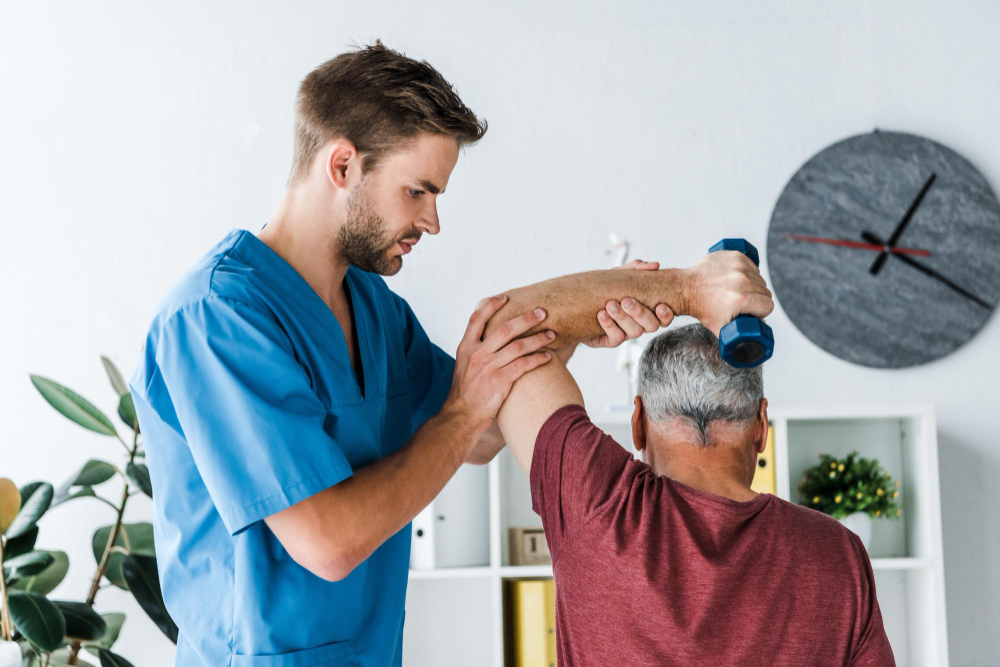
Physiotherapists play a big role in stroke recovery. They assess each person’s needs and create a plan. Because every stroke is different, therapy is tailored for each patient. Physiotherapy for stroke recovery often starts soon after the stroke. This helps prevent stiffness and muscle loss. Common physiotherapy techniques include:
With regular therapy, many people see progress over time. For example, some regain the ability to walk or use their hands.
Key Symptoms and Challenges After a Stroke
After a stroke, survivors often face many challenges. These can affect both movement and independence. Some common problems include:
Because these challenges vary, stroke rehabilitation exercises are chosen to meet each person’s needs.
Steps in the Stroke Rehabilitation Process
The stroke rehabilitation process has several stages. First, an assessment helps the team understand the survivor’s needs. Next, goals are set with the patient and family. Then, therapy sessions begin. These include physiotherapy, speech therapy, and sometimes occupational therapy. Progress is tracked often. As a result, the plan can be adjusted as the survivor improves. The main steps are:
Throughout the process, support from family and therapists is important for success.
Effective Physiotherapy Treatments for Stroke Recovery
Many evidence-based treatments help stroke survivors regain movement. According to the World Health Organization, early and regular physiotherapy leads to better results. Some effective treatments include:
In many stroke rehabilitation centers, therapists use tools like treadmills or balance boards. Because each person is different, treatments are adjusted as needed. With time, many people regain independence after stroke.
Tips for Supporting Recovery and Independence
Families and patients can do many things to support recovery. For example, staying active and practicing exercises at home can help. Here are some tips:
Because recovery can take time, patience and encouragement are very important. Staying engaged in therapy helps with regaining independence after stroke.
Prevention of Further Stroke and Maintaining Progress
After a stroke, it is important to prevent another one. Healthy habits and ongoing physiotherapy can help. Some ways to lower the risk include:
Because progress can slow if therapy stops, regular physiotherapy for stroke recovery is important. Many stroke rehabilitation centers in your area can offer ongoing support. With healthy habits and therapy, many people keep their gains and enjoy greater independence.